The Caitlin Clark Effect: How a Single Rookie Transformed the WNBA into a Global Sporting Empire
INDIANAPOLIS — July 20, 2026
For decades, the conversation surrounding women's professional sports in America, particularly the WNBA, followed a predictable, often frustrating narrative. Purists praised the technical execution and tactical brilliance of the game, while critics pointed to empty arena seats, modest television ratings, and the financial reality of players having to spend their offseasons playing overseas to supplement their incomes. The league was growing, but it was a slow, gradual climb—an incremental march toward sustainability.
And then came Caitlin Clark.
What the sports world has witnessed over the past year is not just a successful rookie campaign or the rise of a new star. It is a seismic cultural and economic displacement that has rewritten the rules of sports business. The "Caitlin Clark Effect" has turned a niche professional league into a mainstream media juggernaut, shattering decades-old assumptions about the commercial viability of women's athletics and elevating the WNBA into a premium, global sporting empire. Today, we break down the anatomy of this sporting revolution.
The Economics of the "Clark Effect"
To fully grasp the magnitude of Clark's arrival, one must look at the hard, undeniable numbers. In her debut season with the Indiana Fever, attendance figures across the WNBA skyrocketed. Games featuring the Fever did not just sell out local arenas; they forced opposing franchises to relocate games to larger NBA venues to meet the unprecedented demand. When the Fever visited the Washington Mystics, the game was moved to the Capital One Arena, attracting over 20,000 fans—the largest crowd for a WNBA game in more than two decades.
The television ratings tell an even more dramatic story. For years, a WNBA broadcast drawing 500,000 viewers was considered a major victory. With Clark on the court, viewership figures regularly surpassed 2 million, outdrawing Major League Baseball games, NBA regular-season matchups, and even Stanley Cup Playoff games. Networks that once broadcast games on secondary channels suddenly found themselves putting WNBA games in prime-time slots on major network television.
This surge in popularity has had immediate, structural benefits for the athletes. The league, buoyed by new sponsorship deals and record merchandise sales (Clark's jersey sold out within hours of her draft selection), finally implemented full-time charter flights for all teams—a safety and recovery amenity that players had been fighting for over a decade. The upcoming media rights deal is projected to be worth triple the previous agreement, promising a massive increase in player salaries and benefits in the next collective bargaining agreement.
Redefining the Geometry of the Court
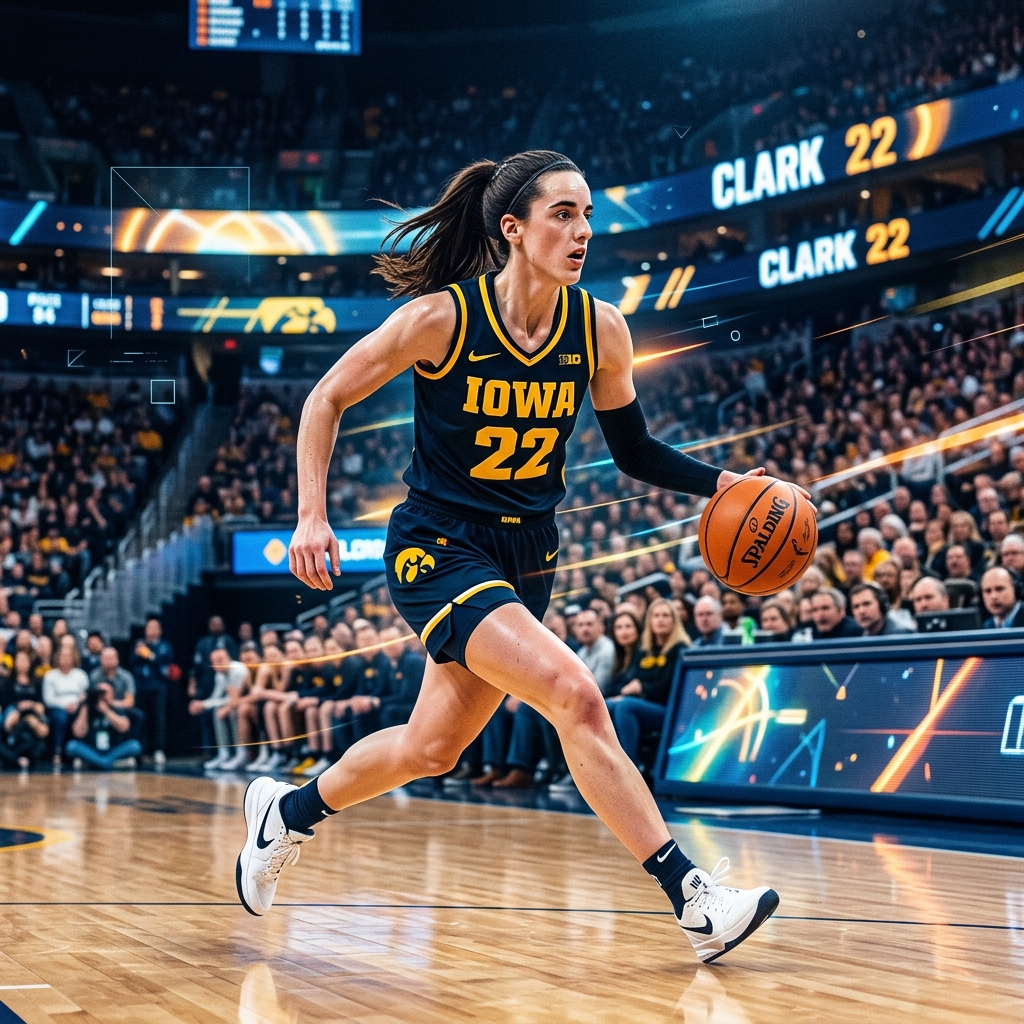
While the business metrics are staggering, the catalyst for this economic boom is what Clark does on the basketball court. Much like Stephen Curry did to the NBA a decade ago, Clark has stretched the geometry of women's basketball, rendering traditional defensive strategies obsolete.
Clark's signature weapon is the "logo three"—a jump shot taken from 30 to 35 feet away from the basket, well beyond the standard three-point line. At the college level with the Iowa Hawkeyes, this shot became a viral sensation, but there were valid questions about whether it would translate to the physical, faster environment of the WNBA. Clark silenced those doubts almost immediately.
By threat of her long-range shooting, Clark forces opposing defenders to guard her the moment she crosses the half-court line. This creates an immense amount of spacing for her teammates. If a defender plays close, Clark uses her quick first step and elite ball-handling to drive past them. If a second defender slides over to help, Clark uses her most underrated skill: her passing vision.
Clark is not merely a scorer; she is a generational playmaker. Her ability to throw precise, one-handed skip passes across the court or drop pocket passes to rolling forwards in the pick-and-roll has elevated the Fever's offense. She set the WNBA single-game assist record as a rookie, proving that her game is as much about making her teammates better as it is about her own scoring output.
The Rookie Crucible: Physicality and the Media Storm
Clark’s transition to the professional ranks was not without its trials. Entering a league filled with elite, veteran competitors, she faced a level of physical defensive pressure and media scrutiny never before seen in women's basketball. Opposing guards picked her up full-court, utilizing physical, bump-and-run tactics designed to test the rookie's composure and stamina.
Every hard foul, every cold shooting night, and every interaction on the court was magnified tenfold by the 24-hour sports news cycle. Pundits debated her place in the league, her relationships with teammates, and the cultural implications of her popularity. The pressure was immense, yet Clark managed to navigate the storm with remarkable maturity.
After an initial adjustment period where she struggled with turnovers and the physical intensity of the schedule, Clark adapted. She began to use her screeners more effectively, improved her conditioning to withstand the physical play, and refined her defensive positioning. By the second half of the season, she was playing with the confidence and efficiency of a seasoned veteran, leading the Fever to their first playoff appearance in years and securing the Rookie of the Year award in near-unanimous fashion.
The Cultural Shift: A New Era for Women's Athletics
Beyond the highlights, the trophies, and the financial spreadsheets, the true legacy of Caitlin Clark's arrival is the shift in public perception. Women's basketball is no longer talked about in terms of what it *lacks* compared to the men's game; it is celebrated for its unique energy, rivalries, and star power.
Young girls and boys now crowd WNBA arenas wearing Clark’s number 22 jersey, viewing her not just as a female role model, but as one of the most exciting basketball players on the planet, period. The success of Clark, along with a talented rookie class including Angel Reese and Cameron Brink, has created a rising tide that lifts all boats. Attendance and ratings are up across the entire league, proving that the interest is sustainable and extends far beyond a single player.
As the WNBA enters this new era of prosperity, it stands as a proof of concept for women's sports worldwide. With the right investment, media exposure, and star talent, women's professional sports can compete for eyeballs, dollars, and cultural relevance at the highest level.
Conclusion: The Horizon of a New Dynasty
We are only at the beginning of Caitlin Clark's professional journey. As she continues to develop her game, build chemistry with her teammates, and add strength to her frame, the Indiana Fever are poised to become championship contenders for years to come.
The "Caitlin Clark Effect" was not a passing trend or a flash in the pan. It was the spark that ignited a long-overdue explosion in the popularity of women's professional sports. We are no longer waiting for the future of the WNBA; the future has arrived, and it is wearing number 22.
Caitlin Clark Rookie Season Profile & Stats
- Position: Point Guard (Indiana Fever)
- Draft: 1st Round, 1st Overall (2024)
- Alma Mater: University of Iowa
- Key Achievements: WNBA Rookie of the Year, WNBA All-Star, Single-Game Assist Record Holder
- Signature Play: Deep logo three-pointer, transition transition pass
- Impact: Led the league to historic highs in attendance, TV viewership, and merchandise sales
— SportsX Editorial Desk | WNBA In-Depth