Messi vs Yamal, Old Guard vs New: The 2026 World Cup Final Is Footballs Greatest Story

EAST RUTHERFORD, NEW JERSEY — July 17, 2026
When the last whistle blew and the semifinal dust settled across North America, the world did not just have two World Cup finalists — it had a story. Not merely a story of football, but one of time itself. Of what it means to pass a torch across generations. Of how a sport that has given the world no shortage of drama still found room, in 2026, to surprise us all.
Spain vs Argentina. Sunday, July 19. MetLife Stadium, East Rutherford, New Jersey. 82,500 seats. A billion pairs of eyes.
This is the 2026 FIFA World Cup Final.
A Tournament That Rewrote the Record Books
Before we get to Sunday, let us first appreciate the extraordinary scaffold upon which this final was built. For the first time since the FIFA Men's World Ranking was introduced in December 1992 — a span of more than three decades — the top four ranked nations at the start of a World Cup are the exact four teams in the semifinal.
Argentina (Ranked 1st). Spain (Ranked 2nd). France (Ranked 3rd). England (Ranked 4th).
Every single one of them made the last four. No upsets at the death. No plucky underdog. Just four footballing superpowers, ranked accordingly, living up to their billing in a way the sport rarely allows.
This alone is historic. But there is more.
This was also only the third time in 96 years of World Cup football that every single semifinalist was a former world champion. The previous two occasions were 1970 — Brazil, Italy, West Germany, and Uruguay — and 1990, when Argentina, West Germany, England, and Italy met in the final four. The 2026 World Cup joins that exclusive, rarefied pantheon. And it does so with a final that somehow outstrips even that extraordinary group-stage context.
Spain: Clinical, Ruthless, Nearly Perfect
La Roja arrived in North America as the reigning European champions, the form team on the planet, and arguably the most watchable side in international football. They did not disappoint. Across seven matches to reach the final, Spain conceded just a single goal — a record of defensive solidity that ranks among the very best in World Cup history.
In the semifinal against France, a match billed as the tie of the tournament, Spain were imperious. Goals from Alvaro Morata and Pedro Porro sealed a commanding 2-0 victory that silenced the French and confirmed what the statistics had been saying all tournament: this Spanish side is the most complete international team in the world right now.
Pedri, the 23-year-old midfield metronome, has quietly assembled one of the great individual World Cup campaigns of the modern era. He does not appear on highlight reels in the way goal-scorers do. He appears everywhere else — pressing high, linking play, recycling possession, arriving late into space. He is the heartbeat of a Spain side that has rediscovered the tiki-taka identity of their 2008-2012 golden era, fused now with a verticality and directness that makes them genuinely difficult to play against.
And then there is Lamine Yamal.
Lamine Yamal: The Boy Who Became a Legend at 19
Lamine Yamal turns 20 in July 2026. The Barcelona winger has been the most electric player of this entire tournament. Quick beyond description. Left-footed with the kind of technique that leaves defenders guessing before the ball has arrived. He has three goals and five assists from seven games. He has dribbled past some of the best right-backs on the planet and made it look choreographed.
What makes Yamal's story particularly vivid — and it has been told in every corner of the global media — is a photograph taken in 2007. A then-20-year-old Lionel Messi, still fresh to the world stage, was photographed at a charity event holding an infant Lamine Yamal. That baby is now attempting to end Messi's reign as the king of world football, on the world's biggest stage, in the World Cup Final.
Football has a flair for the poetic. This tournament has weaponised it.
Messi: A Third World Cup Final at 39
Lionel Messi arrived in the United States for the 2026 World Cup carrying a question that felt almost cruel to ask: does he still have it?
The answer, delivered over seven weeks and seven matches, has been resounding.
Messi is 39 years old. He is playing in his third World Cup Final, following the heartbreaking defeat to Germany in 2014 and the redemptive triumph against France in Qatar 2022. He enters Sunday's final as the tournament's leading scorer, with seven goals from seven matches, as the most-fouled player in the competition, and as the player who has provided the decisive moment in almost every game Argentina have played.
Against England in the semifinal — a match that ended 2-1 after Lautaro Martinez's late, dramatic winner — it was Messi who provided the assists for both Argentinian goals. His through-ball for Martinez's winner, weighted perfectly and disguised masterfully with the outside of his right boot, prompted a standing ovation from sections of the English crowd. Even they could not pretend they had not witnessed something extraordinary.
Argentina's manager Lionel Scaloni has built this side expertly around his captain while ensuring Messi is never required to carry the load alone. Julian Alvarez, Rodrigo De Paul, and Enzo Fernandez have all been exceptional, providing the engine room that allows Messi to be the spark plug rather than the entire engine.
A Rivalry That Has Waited 60 Years
Here is something that will surprise even hardcore football fans: Spain and Argentina have not played each other in a World Cup match since 1966 — the group stage at Wembley, which Spain won 2-1. That is 60 years of these two nations competing at the pinnacle of the global game without ever meeting in the knockout rounds. Sunday corrects that anomaly with the highest possible stakes.
In terms of recent form in friendly and competitive encounters, the record is broadly even. What makes this final difficult to predict is that both teams play a similar philosophy — possession-based, tactically sophisticated, reliant on individual brilliance within a collective framework — meaning neither side will be particularly surprised by what the other does. The margins between them are extraordinarily thin.
Tactics: How This Final Will Be Won and Lost
Spain's manager Luis de la Fuente will deploy his familiar 4-3-3, with Pedri, Fabian Ruiz, and Rodri forming the midfield triangle that has been the most dominant unit of its kind in world football. Their pressing will be relentless from the first whistle. Spain have averaged 65 percent possession across this tournament and have completed more passes than any other side in the competition.
The key to stopping Argentina is stopping Messi from receiving the ball in the pockets between the lines — a task Spain have assigned to Rodri, the Manchester City anchor, who has the physicality and spatial intelligence to do it better than perhaps anyone else in the world.
For Argentina, the task is clear but enormously difficult: win the ball back quickly, transition at pace, and find Messi in space before Spain can reorganise. Scaloni has been tactically flexible all tournament, and against Spain he may sit slightly deeper and invite pressure before playing on the counter — a tactic Argentina have perfected under his management. The midfield battle between De Paul and Fernandez against Rodri and Fabian Ruiz will be the defining contest within the contest.
MetLife Stadium: Football's Cathedral for One Night
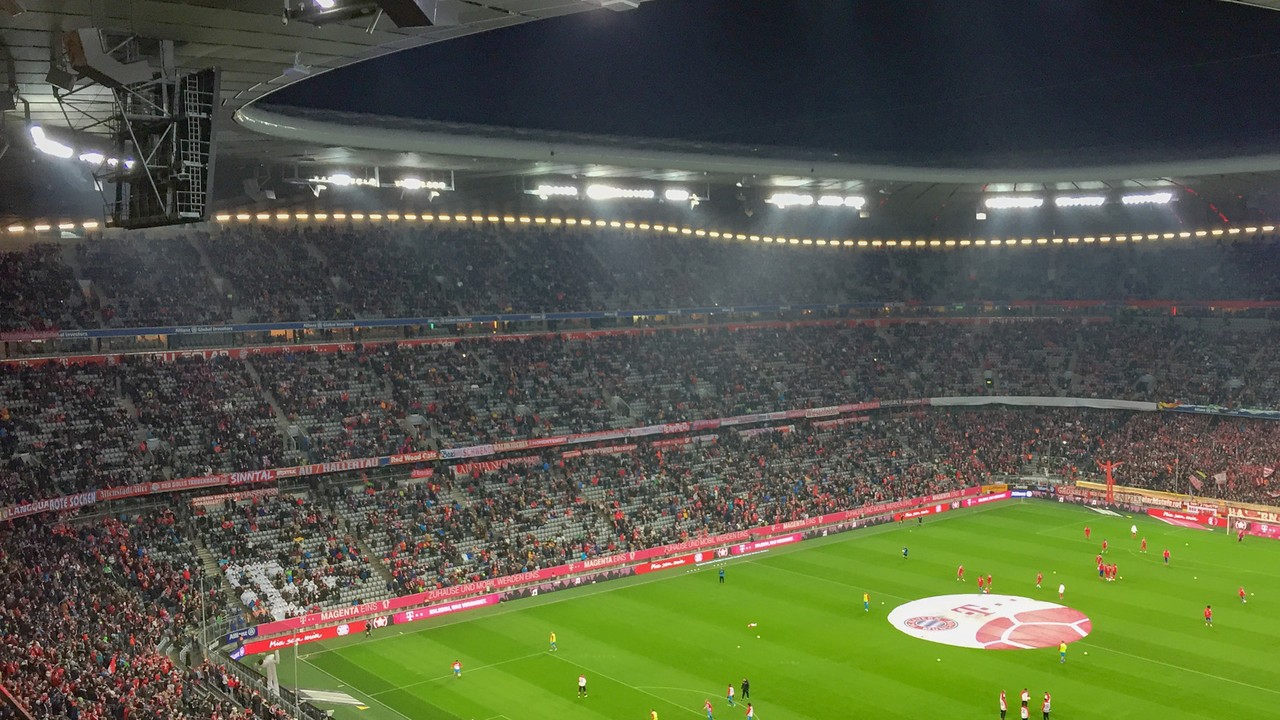
MetLife Stadium, situated in the meadowlands of New Jersey with the Manhattan skyline visible on a clear evening, will tonight become the focal point of the entire planet. The 82,500-seat venue has been one of the great successes of this World Cup — immaculate pitches, extraordinary atmospheres, and a sense of occasion that has consistently delivered.
The surrounding spectacle is equally extraordinary. Post Malone will perform in the pre-match ceremony at 13:30 local time. The halftime show — an event unto itself — features Madonna, Shakira, and BTS. The symbolism of Shakira performing at a World Cup Final involving Argentina, given her iconic 2010 World Cup anthem Waka Waka, has not been lost on anyone connected to either team. It is the kind of detail that makes this tournament feel almost absurdly large.
The Numbers Tell the Story
- Spain's goals conceded across 7 matches: 1 (tournament best)
- Argentina's goals scored across 7 matches: 18 (tournament joint-highest)
- Messi's tournament goals: 7 (Golden Boot leader)
- Yamal's goals and assists combined: 8 (tournament top attacker)
- Spain's World Cup Finals record: Won 2010 vs Netherlands
- Argentina's World Cup Finals record: Won 1978, 1986, 2022; Lost 1930, 1990, 2014
- Last World Cup meeting between the sides: 1966 Group Stage — 60 years ago
What This Moment Means for Football
There is something genuinely irreplaceable about this World Cup Final. It is not just the combination of two historically great footballing nations. It is not just the extraordinary venue, or the unprecedented narrative of a tournament where the top four ranked teams in the world all reached the final four. It is that this final brings together, on the same pitch, in the same 90 minutes, the greatest player of his generation and the player who may very well become the greatest of the next.
Messi and Yamal. Thirty-nine years old and nineteen years old. A combined age of 58, carrying between them the weight of two nations and the hopes of billions of football supporters who want nothing more than to witness greatness before the curtain falls.
For Messi, this is almost certainly his final competitive match at a World Cup, win or lose. He has said as much in the pre-tournament build-up. If Argentina win on Sunday, he becomes only the second player in history — after Brazil's Cafu — to win back-to-back World Cups as his nation's captain. If Spain win, Yamal becomes the youngest player ever to win a World Cup on the biggest possible stage, and the torch will have been passed between generations in the most spectacular fashion imaginable.
Either way, we are the lucky ones. We get to watch it.
Our Prediction: A Final for the Ages
Both teams are capable of winning this. Spain's defensive record and tactical sophistication make them the marginal favourite — a view shared by most analysts and the pre-match betting markets. But Argentina have won the big games in this tournament in ways that defy statistical expectation. They have been resilient, creative, and lethal. And they have Lionel Messi in the form of his late career.
This will not be a cagey, cautious final. These are not teams that play for penalties. Both sides press high and play to win from the first whistle. Expect goals. Expect drama. Expect the kind of football that reminds you exactly why you fell in love with this sport in the first place.
Our call: Spain 2-1 Argentina — but the heart hopes otherwise. Because if Messi lifts that trophy one more time, at 39, at MetLife Stadium, in front of one billion watching eyes, it will be one of the greatest sporting stories ever told.
Kick-off: Sunday, July 19, 2026 | 15:00 ET | MetLife Stadium, East Rutherford, New Jersey
— SportsX Editorial Desk