Asia Cup 2026 Super Four Showdown: India Clash with Sri Lanka at R. Premadasa Stadium in Colombo on September 12
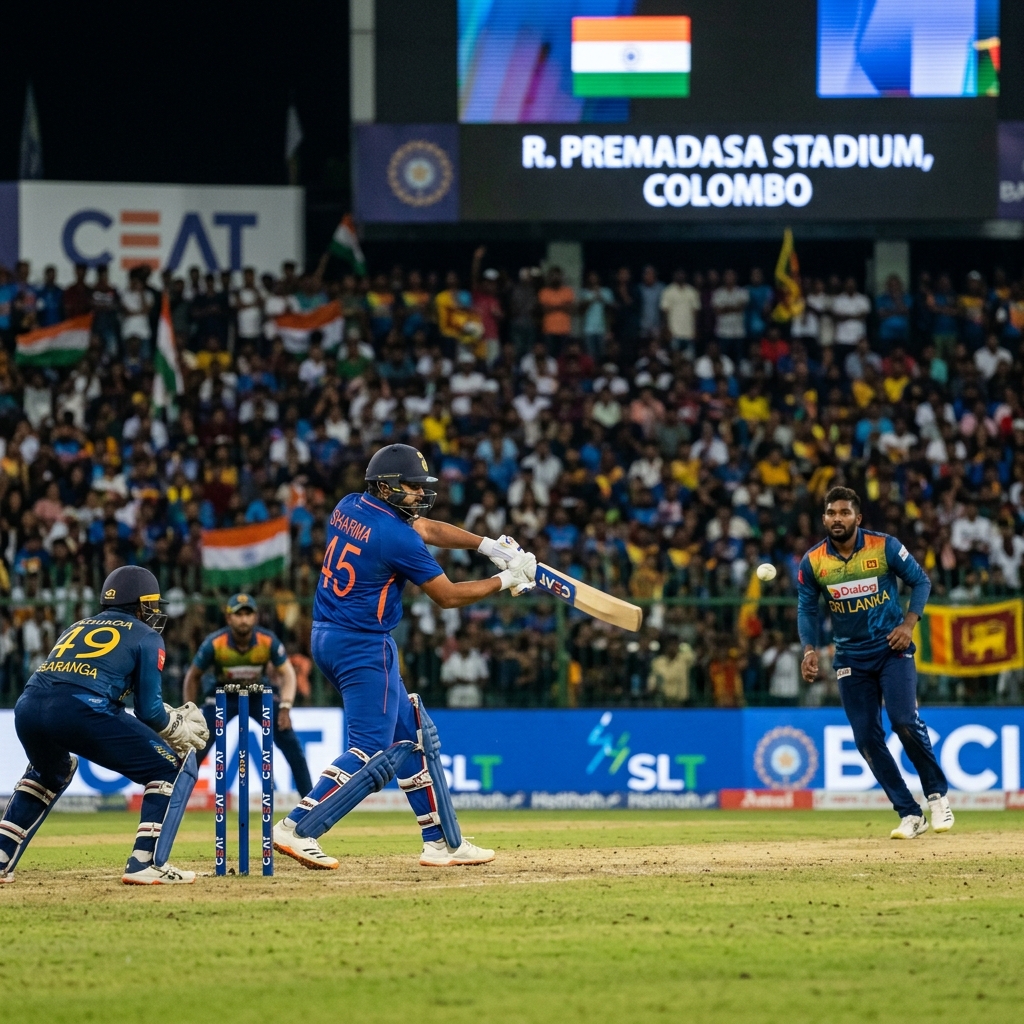
COLOMBO, SRI LANKA — September 8, 2026
The Asian Cricket Council (ACC) Asia Cup 2026 reaches fever pitch as the Super Four stage features a blockbuster encounter between seven-time champions India and host nation Sri Lanka at the historic R. Premadasa Stadium in Colombo on Saturday, September 12, 2026. Matches between these two South Asian cricketing giants in Colombo carry enormous regional prestige, with both teams competing for a coveted spot in Sunday’s grand final. Adhering strictly to international match standards and ACC tournament guidelines, Saturday’s fixture presents a masterclass in subcontinental tactical cricket.
India arrive in the Super Four stage maintaining an unbeaten record, displaying total dominance across both batting and bowling departments. Under their high-intensity tactical framework, India’s top order has combined explosive powerplay hitting with calculated middle-over rotation. However, playing Sri Lanka in Colombo presents a unique tactical challenge, where a passionate home crowd combined with a traditional spin-friendly Premadasa surface creates an intense environment for visiting teams.
Colombo Pitch Conditions and Spin Surface Dynamics
The pitch at the R. Premadasa Stadium is famous throughout world cricket for its distinct dry, abrasive characteristics that offer immense assistance to slow bowlers. As the match progresses into the evening, the surface traditionally slows down, producing sharp turn, variable bounce, and natural variation off the seam. Winning the toss and establishing a strong first-innings total is widely considered a paramount advantage in Colombo night matches.
Sri Lanka’s spin arsenal, led by star leg-spinner Wanindu Hasaranga and young left-arm spinner Dunith Wellalage, is specifically tailored for these conditions. Hasaranga’s disguise on his wrong-un combined with Wellalage’s tight stumps-to-stumps line makes scoring boundaries in the middle overs (overs 11 to 40) extremely challenging. India’s middle-order batters must employ precise footwork, controlled sweep shots, and quick rotation of strike to prevent Sri Lanka’s spinners from building dot-ball pressure.
India's Batting Blueprint: Gill and Suryakumar vs Hasaranga
India's offensive game plan relies on setting an explosive tempo during the mandatory 10-over powerplay when field restrictions allow only two outfield defenders. Opening batter Shubman Gill excels at exploiting powerplay field settings, driving high-velocity seamers over the infield with elegant timing. Gill’s ability to anchor the innings allows India’s middle-order power hitters to attack with freedom in later stages.
The primary tactical duel of the match features T20 specialist Suryakumar Yadav against Wanindu Hasaranga. Suryakumar’s 360-degree sweep variations and lofted drives over extra cover provide India with the perfect weapon to dismantle Sri Lanka’s spin traps. If Suryakumar can disrupt Hasaranga’s length early in his spell, Sri Lanka’s captain will be forced to push outfield fielders back, opening easy single-and-double scoring lanes across the outfield.
Kuldeep Yadav and Jasprit Bumrah: India’s Bowling Masterclass
While India's batting attracts global spotlight, their bowling attack has proven equally lethal on subcontinental pitches. Left-arm wrist-spinner Kuldeep Yadav has re-emerged as India’s premier wicket-taking threat in middle overs. Kuldeep’s drift into right-handed batters combined with sharp turning wrist-spin makes him almost unplayable on turning Colombo tracks. Supported by Ravindra Jadeja’s relentless accuracy, India’s spin tandem can turn tight matches in a span of three overs.
Complementing the spin attack is pace maestro Jasprit Bumrah, whose lethal yorkers, disguising slower balls, and searing seam movement make him the ultimate weapon in both powerplay and death overs (overs 41 to 50). Sri Lanka’s top-order batters, led by Pathum Nissanka and Kusal Mendis, must survive Bumrah’s opening spell without losing early wickets if Sri Lanka hope to construct a winning score.
Dew Factor, DLS Protocols, and ACC Standards
A critical environmental factor in Colombo day-night matches is the heavy evening dew that frequently settles on the outfield past 20:00 local time. Dew makes the leather ball wet and slick, hindering spinners' grip and making high-velocity fielding treacherous. Teams bowling second often struggle to control ball seam, favoring the side chasing under lights.
Furthermore, in accordance with Asian Cricket Council (ACC) tournament rules and ICC Standard Playing Conditions, match referees will monitor weather radar closely due to potential coastal rain showers off the Indian Ocean. Duckworth-Lewis-Stern (DLS) calculation protocols will dictate revised targets if weather interruptions occur, requiring both captains to maintain constant awareness of par scores at the conclusion of every over.
Pre-Match Quotes from Team Captains
Indian Team Management: "Playing Sri Lanka in Colombo is always a severe test of our spin-playing capability and tactical discipline. The pitch here demands patience and smart cricket. We have prepared thoroughly for their spinners, and our focus is on executing our skills with clarity."
Sri Lankan Team Captain: "India are a world-class team, but playing in front of our home fans at Premadasa gives us immense energy. We know these pitch conditions intimately. If our spinners bowl their tight lines and we field with intensity, we believe we can win this crucial Super Four match."
Match Snapshot
- Fixture: India vs Sri Lanka
- Competition: ACC Asia Cup 2026 (Super Four Stage)
- Date & Time: Saturday, September 12, 2026 | 15:00 IST / 15:00 SLST (09:30 GMT)
- Venue: R. Premadasa Stadium, Colombo, Sri Lanka
- Match Format: 50-Over One Day International (Standard ACC Rules)
- Key Player Duel: Suryakumar Yadav vs Wanindu Hasaranga
- Estimated Reading Time: 5 Minutes
— SportsX Editorial Desk | Asian Cricket Council Special